


HISTORY
Karate (空手) is a Japanese word- kara means “empty”, te means “hand” .Karate therefore means “empty hands” which was originally started as a defensive form of Martial Art in Okinawa, an island between China and Japan.
An art of self-defense and a sport, which has in decades proliferated worldwide. Modern Karate originated in Okinawa. It was introduced to Japan in the early 20th Century It was spread worldwide after World War II.
In the early 1970s, in order to attempt some unification in the sport two major World Organizations were formed- World Union of Karate-Do Organizations (WUKO) , International Amateur Karate Federation (IAKF). Both the Organizations have large followings worldwide.
The root of Sport Karate can be traced to ancient India, China, Okinawa. Many Martial Scholars consider India as the birthplace of all Martial Arts. The Indian combat techniques are similar to the modern Karate that was transmitted to China by Zen Buddhist monks.
At the end of the 5th century A.D, a Buddhist priest named Bodhidharma travelled to China from India to instruct at the Shaolin monastery. A combination of Yoga and Indian fist-fighting was taught to the monks by him that became the Kung-fu system of Shao-lin. The fighting techniques of China were carried by immigrants, refugees, priests to the offshore islands-Okinawa. Weaponless combat called te (hand), had already existed on Okinawa. Te developed into a crude form of Karate with the aid of Chinese Kung-Fu masters who fled from China. To indicate its Chinese origin the new art was translated to mean T’ang hand. An Okinawan Karate Instructor Gichin Funakoshi had introduced Okinawa-te to Japan, he is the founder of shotokan
Yasutsune Itosu of Okinawa, an exponent of Shuri-te (Shorel-ryu) was the first to teach the Karate as a sport. In 1905 he made this Innovation for middle school students for inclusion in the physical education when occupying Japanese authorized Karate. Other styles of karate-do were also developed.
Kenwa Mabuni who had introduced the Shito-ryu in 1930 and Chojun Miyagi who had combined the hard Okinawan karate with soft Chinese forms that was known as goju-ryu was among the Okinawan masters who brought their styles to Japan. Hironori Otsuka is the founder of Wado Ryu . It was founded on 1939 .
In Japan and Okinawa following the World War II, owing to the presence of many western servicemen. The karate has gradually acquired devotees in America and Europe. Karate was well established by the late 1950s and early 1960s. The art was practiced extensively worldwide by the 1970s.
The first Grand Master of Karate was Sokon Matsumura who reformed, classified this martial art into three basic styles in 1830:
- Naha-Te (那覇手).
- Shuri-Te (首里手).
- Tomari-Te (泊手).
In past it is mainly the “Boddha Vikshus” (disciples of Lord Buddha) practiced Karate for their Self-defence, as they migrated to different parts of the world. It has gradually became famous. Earlier there were many styles that used to practiced .
World Karate Federation ( WKF ) has recognised the Four main distinctive Japanese styles that have emerged in today Modern Karate are:
- Goju-ryu (剛柔流).
- Shito-ryu ((糸東流).
- Shotokan (松濤館).
- Wado-ryu (和道流)
The largest Organization for Karate as a Sport is the World Karate Federation (WKF) that has developed a system of rules and regulations.
KARATE AS BUDO
To those who practice karate, it is a form of martial art ,but more importantly It is a form of human development through which we can change our habits, became more valuable to our community, as well as to everyone we touch in our daily lives. In order for us to be better able to compete in this fast moving world of ours, we must learn discipline. We must learn patience and we must have the endurance needed to help keep us motivated to overcome life’s many obstacles.
KARATE AS PHYSICAL EDUCATION
As a form of physical education, karate is unparalleled. Most any sport, when practiced, will develop one part of the body or another. This is not so in Karate. Karate, because of the wide variety of techniques practiced, involving all parts of the body, will develop a very well-balanced and overall coordinated body.
GOJU-RYU (剛柔流)
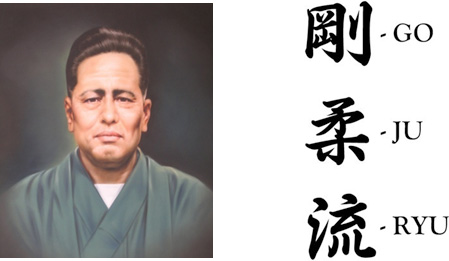
Chojun Miyagi
Founder of Goju-ryu
Miyagi Chojun Sensei is the Founder of the Goju Ryu Karate. Goju-ryu is one of the main traditional Okinawan styles of Karate.Go means “hard” that refers to closed hand techniques/ straight linear attacks, Ju means “soft” that refers to open hand techniques/ circular movements.
It is one of the main traditional Okinawan styles of karate, featuring a combination of hard and soft techniques. Hard and Soft principles cone from the famous martial arts book Bubishi used by Okinawan masters during the 19th and 20th centuries. and partner drills.
Major emphasis is given to breathing correctly. Gōjū-ryū practices methods that include body strengthening and conditioning, its basic approach to fighting
It incorporates circular and linear movements into its curriculum. It combines hard striking attacks such as kick and close hand punches with softer open hand circular techniques for attacking, blocking, and controlling the opponent, including locks, grappling, takedowns and throws.
The development of Goju-ryu goes back to Kanryo Higashionna a native of Naha, Okinawa. As a teenager he used to trained with an Okinawan master named Arakaki Seisho. .
In 1873 he traveled to Fuzhou in Fujian Province, China, where he studied from various teachers. In 1877 he began to study under a kung fu master called Ryū Ryū Ko (or Liu Liu Ko, or To Ru Ko; the name is uncertain.) Tokashiki Iken has identified him (Patrick McCarthy has translated and cited Tokashiki in his work) as Xie Zhongxiang, founder of Whooping Crane Kung Fu. This great master taught a handful of Okinawan students who went on to become karate legends.
Higashionna returned to Okinawa in 1882 and continued in the family business of selling firewood, while teaching a new school of martial arts, distinguished by its integration of gō-no(hard) and jū-no (soft) kempo into one system. Higashionna’s style was known as Naha-te. Gojukai history considers that Chinese Nanpa Shorin-ken was the strain of kung fu that influenced this style.
In 1933, Gōjū-ryū was the first Karate school officially recognized as budō in Japan by Dai Nippon Butoku Kai and the only style of Karate with a full historical representation in both Okinawa and Japan. This recognition places Goju-ryu Karatedo among the modern martial arts, or gendai budō.
Higashionna’s most prominent student was Chojun Miyagi (1888–1953) who began training under Higashionna at the age of 14. In 1915 Miyagi and a friend Gokenki went to Fuchou in search of Higashionna’s teacher. They stayed for a year and studied under several masters but the old school was gone (Boxer Rebellion 1900). Shortly after their return, Higashionna died. Many of Higashionna’s students continued to train with him and he introduced a kata called Tensho which he had adapted from Rokkishu of Fujian White Crane.
Higashionna’s most senior student Juhatsu Kyoda formed a school he called Tōon-ryū (Tōon is another way of pronouncing the Chinese characters of Higashionna’s name, so Tōon-ryū means “Higashionna’s style”), preserving more of Higashionna’s approach to Naha-te.
The name Goju-ryu Karate literally means “hard soft school of karate.” In 1930 at the All Japan Martial Arts Demonstration in Tokyo, one of the other demonstrators asked Chojun Miyagi’s top student, Jin’an Shinzato as to what school of martial arts he practiced. On his return to Okinawa he reported this incident to Chojun Miyagi, who decided on the name Gōjū-ryū as a name for his style. Chojun Miyagi took the name from a line of the poemHakku Kenpo, which roughly means: “The eight laws of the fist,” and describes the eight precepts of the martial arts. This poem was part of the Bubishi, a classical Chinese text on martial arts and medicine. The line in the poem reads: Ho wa Gōjū wa Donto su “the way of inhaling and exhaling is hardness and softness,” or “everything in the universe inhales soft and exhales hard.”
BUBISHI
The “Bible of Karate: Bubishi ” is an ancient Chinese martial art book. It means martial equipped intention or spirit. It is a classic text on philosophy, strategy, medicine and technique as they relate to the Martial Arts. From the Founder of Goju-ryu there are seven major disciples- Mr Higa, Mr Yagi, Mr Miyazato, Mr Iha, Mr Shinzato, Mr Uehara. These are the disciples that has received the BUBISHI from Chojun Miyagi after having Mastered the Goju Ryu Karate. In 1979, he received the Bubishi copy and together with the recognition from his master Masashi Sudo. From the Founder Chojun Miyagi to Seiko Higa, to Kanki Izumikawa, to Sosui Ichikawa, to Masashi Sudo, to Kenshu watanabe
HANSHI KENSHU HIDEO WATANABE
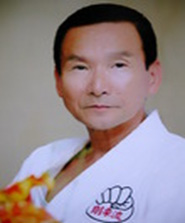
Founder,Grandmaster of Goju-Ryu Karate-Do Mission International
5th receipient of Bubishi Master’s Degree
Black belt – 9th dan , Japan ,
He is the 5th generation Goju-ryu Bubishi holder. Mr Ichikawa is the Headmaster. He was born on July, 1946 in Tokyo ,Japan. He became a member of the Legendary Tokyo karate team including top JKA instructor in 1969. He has completed in the first all Japan Karate Do Championships that was conducted by the Japan Karate Do Federation. In 1975, he was awarded the rank of Godan (5th dan) by the Japan Karate Do Federation. He received the Bubishi Master’s degree in Goju-ryu Karate Do from his teacher, Master Masashi Sudo. Kenshu Watanabe lineage can therefore be traced through masters Masashi Sudo , Sosui Ichikawa , and Seiko Higa to the Founder of Goju Ryu , Chojun Mayagi and his Master Kanyo Higaonna which is defined as the Bubishi Goju Ryu Master .